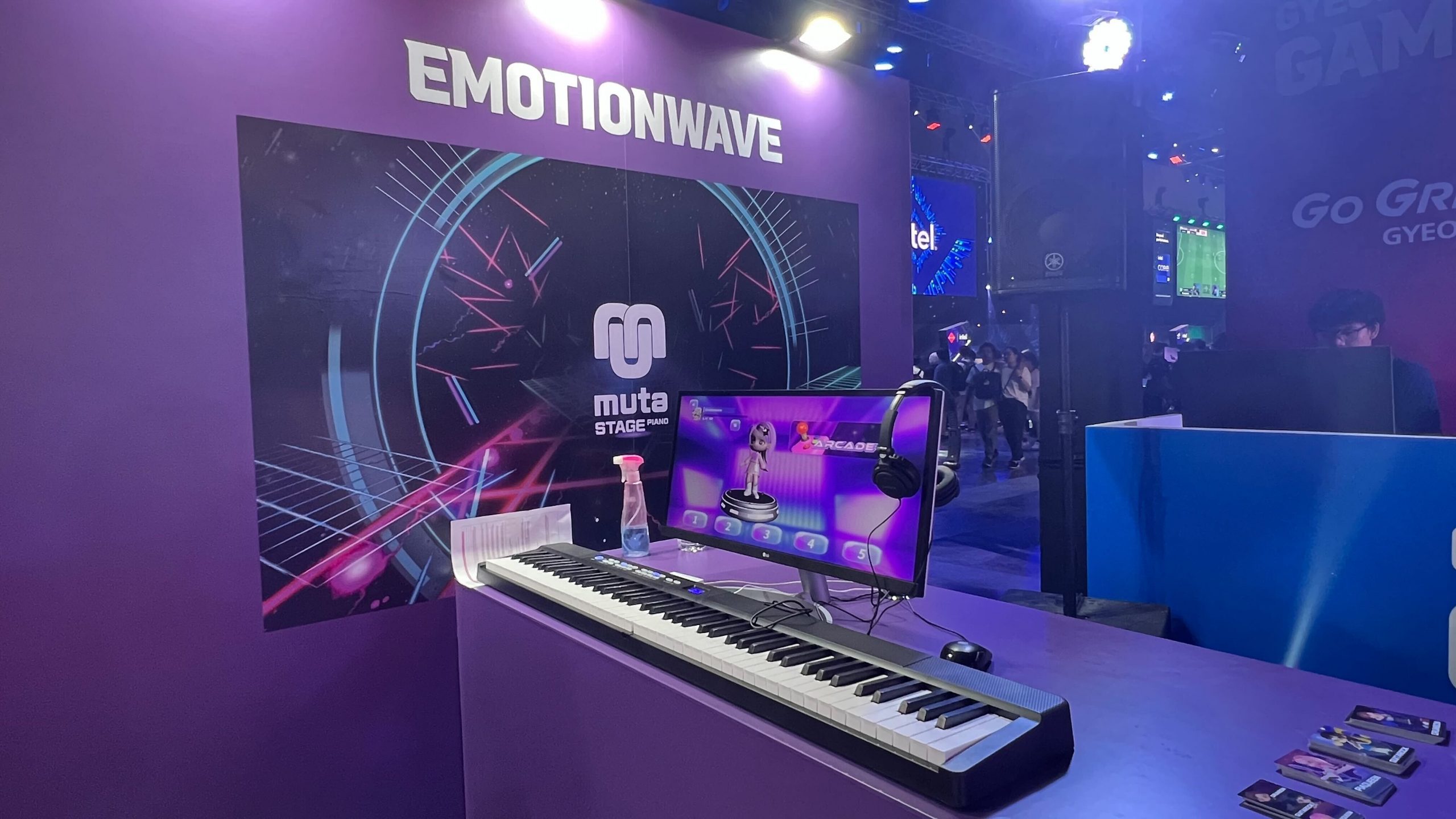
MUTA Stage Piano offers a rhythm action game where users improve their piano skills through playing the piano and solve crises by collaborating with avatars in…
**Analysis of Artificial Intelligence Technology Adoption in Games up to 2022**
The adoption of artificial intelligence technology in the game industry has shown continuous growth up to 2022. AI technology is mainly used to develop the reactions and intelligence of non-player characters (NPCs), allowing these NPCs to be controlled similarly to human intelligence. Furthermore, AI contributes greatly to improving the efficiency and creativity of game development, enabling developers to perform tasks they could not accomplish alone and plan for new technologies and more advanced levels of games. Ubisoft mentioned that the biggest challenge of artificial intelligence is mimicking the complex and mysterious ability of the human brain, which is imagination. Along with these trends, the application of AI continues to promote growth in the game industry, as confirmed by a recent survey from McKinsey.
**Current Status and Trends of Artificial Intelligence Technology in Gaming in 2023**
The global market size for artificial intelligence in the gaming industry is expected to grow with an unexpected Compound Annual Growth Rate (CAGR) from 2023 to 2030. This growth is attributed to continuous research and the development of new AI-based games.
In particular, looking at major trends in October 2023, it can be seen that several game development companies are exploring more innovative ways in game production by utilizing artificial intelligence technology.
Krafton's AI Game Studio – ReLU Games
Krafton has established a new independent studio called ReLU Games to focus on game production utilizing AI technologies such as deep learning. The first project planned is 'Punda: AI Puzzle,' which will provide users with a customized puzzle experience by having an AI generate puzzle stages. Furthermore, they are pursuing various AI-based game projects, such as 'Project Orchestra' which utilizes voice recognition. These initiatives contribute to providing users with new experiences through the convergence of AI and game design, thereby enhancing both the creativity of the game and player engagement.
Blizzard's Image Generation AI Tool – Blizzard Diffusion
Blizzard is increasing the efficiency of game production by developing an image generation AI tool called 'Blizzard Diffusion.' This tool generates concept art for game backgrounds, characters, and costumes, and introduces AI tools that can also be utilized in areas such as level design, voice cloning, game coding, and debugging. These tools reduce repetitive and manual tasks, helping developers allocate more time to creativity. This makes it possible to realize creative game ideas while simultaneously improving the efficiency of game development.
The Rise of AI for Game Graphic Generation
American startup Robot Invader has developed a game engine called 'Story Machine,' which generates graphics such as characters and backgrounds from text using AI tools like 'Stable Diffusion' or 'DALL-E.' This engine is designed for individuals who lack programming or design knowledge, rather than large game studios. They have already registered a game titled 'Beacons Bluff,' created with 'Story Machine,' on Steam. This trend shows that it helps developers solve time-consuming tasks like graphics so they can focus instead on the story or gameplay. This means that AI technology contributes to reducing the workload of developers and assisting in more creative game production.
What is clearer through this update is that the utilization of artificial intelligence technology in the game industry is expanding, playing a crucial role in promoting innovation across various fields of game production and providing new experiences to users.
**Emotionwave's Music AI Technology Adoption in Games and Future Growth Potential**
Emotionwave's MUTA Stage Piano offers a rhythm action game where users can improve their piano skills through playing the piano and solve crises by collaborating with an avatar in a metaverse world. Users can utilize generative AI to practice performances in desired music styles, which helps increase interest and learning speed. The MUTA Stage Piano provides an environment where users can generate music in their desired style and select practice elements from the generated music. These features mean that the MUTA Stage Piano presents new possibilities for music games, offering a novel user experience by combining music and gaming.
Future Game Trends and the Impact of Artificial Intelligence on Gaming and Customer Experience After 2024
Artificial intelligence is expected to remain a major trend in the game industry even after 2024. AI technology enhances the efficiency and creativity of game development, providing users with richer and more engaging experiences. Furthermore, AI is anticipated to play a crucial role in improving gaming experiences on new platforms such as the metaverse, which seems set to make a significant contribution to the future growth of the game industry.
Expected Market Growth
Due to the introduction and continuous advancement of research and development in artificial intelligence, the game industry is expected to continue growing. AI enhances the creativity and user experience of games, which means it will support the growth and expansion of the game industry. Tags Web 3.0 #RhythmAction #Metaverse #MUTA #StageCloud #Piano #Algorithm #MusicCreation #AI_Music #GameProceduralGeneration #Emotionwave Editing Team